


Five frontier AI companies have moved their war front. OpenAI, Anthropic, Microsoft, Google, and SpaceX/xAI have all decided the harness — the operating layer wrapping the model — is the product. The model is becoming rented infrastructure underneath. Most enterprise boards have not been told. Worse: most enterprises do not have one harness. They have many — partial harnesses from Salesforce, Microsoft, vertical SaaS vendors, consultancies, and internal teams, each assembled one procurement cycle at a time without a wall diagram. I call this the fragmented harness. The strategic question is no longer which model. It is where in the stack you actually compete — and own.
OpenAI now ships Workspace Agents, an Agents SDK with a model-native harness, and Frontier — an enterprise platform for deploying, governing, and managing AI agents at scale. In February 2026, Sam Altman hired Peter Steinberger, the creator of OpenClaw. OpenClaw is the fastest-growing open-source AI agent in history — 196,000 GitHub stars and two million weekly users in its first three months. OpenClaw itself moves to an independent foundation that OpenAI sponsors but does not own. Anthropic has split its product surface into Claude Code, Claude Cowork, and Claude Design — three domain-specific environments built on the same underlying model. Microsoft is folding Agent 365 — generally available in May 2026 — into the Windows and Microsoft 365 stack as the control plane for identity, governance, and lifecycle management. Google has rebuilt Vertex AI into the Gemini Enterprise Agent Platform, launched at Google Cloud Next in April 2026. SpaceX — which merged with xAI in February 2026 — has secured an option to acquire Cursor for $60 billion later this year, with Microsoft having looked at the same deal before pulling out.
The pattern is unmistakable. The model has become a component. The product is the system that wraps it. None of these companies are competing on whose model is smartest. They are competing on whose system around the model is most defensible.
This is not a contrarian take. It is the consensus among the people building the frontier — and most boards have not yet been told.
What a harness is, and why a board should care
A large language model, on its own, is a stateless reasoning engine. Give it a prompt, get a response, and it forgets you the moment the response ends. To turn it into something that can do useful work in your business — read a contract, draft a quote, escalate a ticket, reconcile an invoice — you have to wrap it in scaffolding. The industry has converged on a name for this scaffolding: the harness.
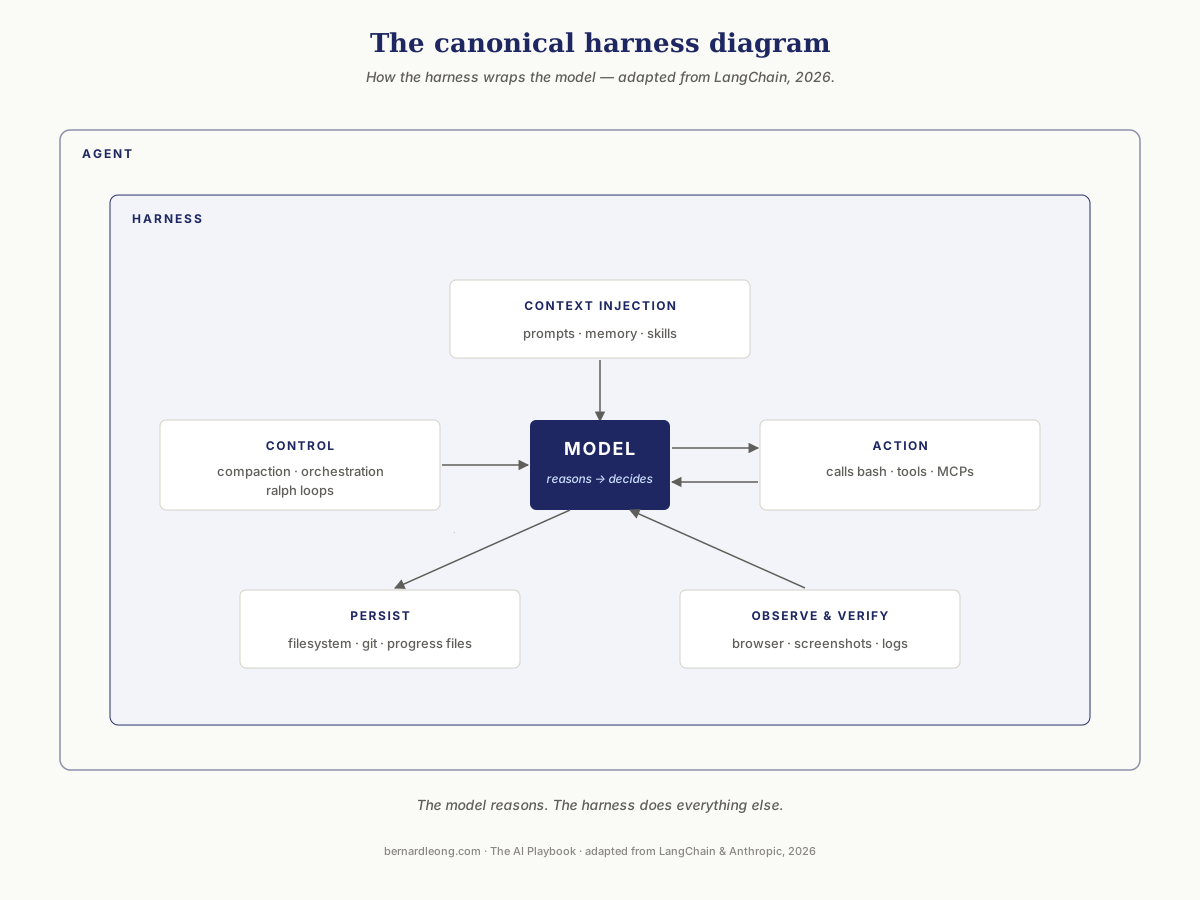
A harness is everything around the model. It includes the tools the agent is allowed to use, the memory it carries between sessions, the context it sees about your business, the orchestration logic that breaks a goal into steps, the recovery paths when something fails, the governance gates that decide what the agent may do without human approval, and the evaluation systems that tell you whether it is doing the right thing. The model reasons. The harness does everything else.
The analogy that travels: the model is the CPU. The harness is the operating system. You do not run applications on the CPU; you run them on the OS. The CPU gets faster every year and more interchangeable every year. The OS is where the work actually lives — and where the lock-in actually accumulates. AI has now reached its operating-system layer. Most enterprises are still arguing about chips.
For readers who want the engineer's view of why this matters at the implementation layer, Sau Sheong's "Own Your Harness" is the clearest treatment I have seen. The argument that follows here operates one altitude up — at the layer where the decisions are made by people who do not read source code.
The five-player tell
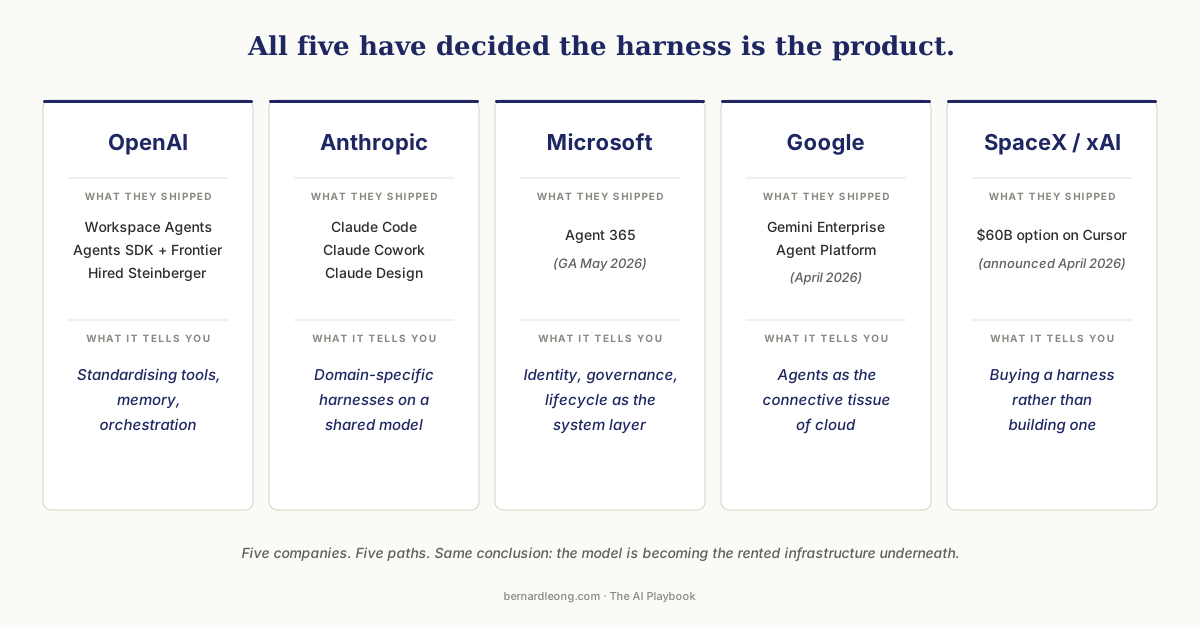
Five companies. Five different paths. All five have decided that the harness is the product. The model is becoming the rented infrastructure underneath.
The Steinberger move is the most telling of the five. OpenAI did not buy OpenClaw — they hired its creator and let the harness itself stay independent. Both Meta and Microsoft were also bidding; Satya Nadella reportedly called Steinberger directly. The non-negotiable condition that closed the deal was keeping OpenClaw open. The founder went into the building. The harness stayed in the commons. This is what acquiring harness expertise looks like in 2026: pay any price for the people who design the operating layer. Treat the open foundation around it as a strategic asset, not a competitor.
The fragmented harness — the diagnosis nobody has on a wall diagram
Here is what almost no enterprise has on a wall diagram. They do not have a harness. They have many.
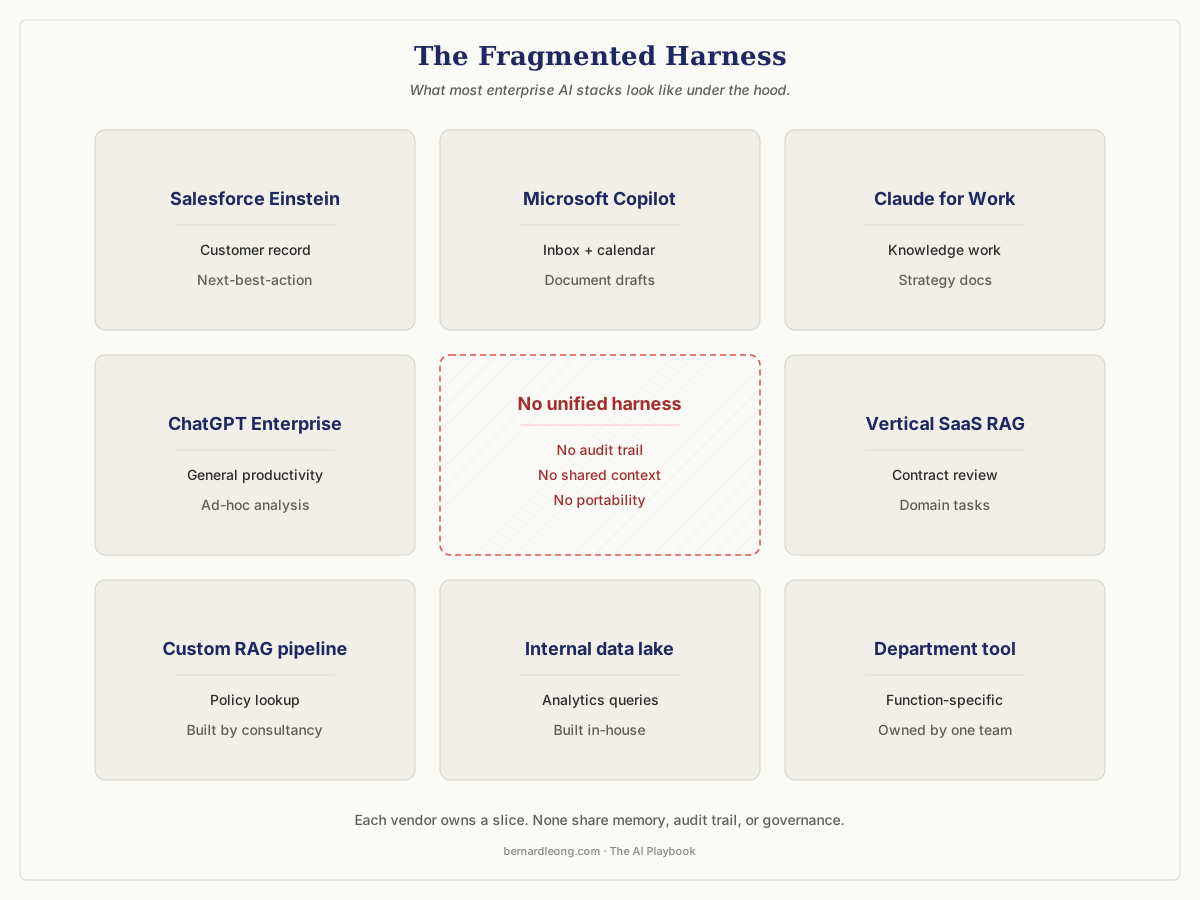
Salesforce Einstein owns one slice of their AI operating system — the customer record, the case history, the next-best-action logic. Microsoft Copilot owns another — the inbox, the calendar, the document drafts. Claude for Work owns a third. ChatGPT Enterprise a fourth. A vertical SaaS vendor owns the contract review slice. A consultancy delivered a custom RAG pipeline that owns the policy-lookup slice. The data lake team built something internal for a fifth. Each of these is a partial harness. Each owns a portion of the company's institutional memory. None of them talk to each other. None of them produce a single audit trail. None of them are governed by one policy.
Most enterprises did not decide to operate this way. They arrived here by accident, one procurement cycle at a time. A Chief Marketing Officer signed for one vendor. A Chief Operating Officer signed for another. The Group CIO signed for a platform deal. Nobody put the diagram on the wall, because the diagram does not exist. I call this the fragmented harness — an unintentional operating system assembled from a dozen vendor SKUs, each calibrated to its own fleet's telemetry, none calibrated to yours.
I see this in every executive workshop I run. We will draw the AI stack on a whiteboard, and within ten minutes the room realises that nobody in the company has the full inventory. Not the CIO. Not the CISO. Certainly not the CEO. The auditor will eventually ask for it, and the answer will have to be reconstructed from procurement records.
Once you can see it, you cannot unsee it. The first job of an AI operating model is to name where the fragments are and decide which ones to keep, which to consolidate, and which to own.
The Owned Harness Doctrine
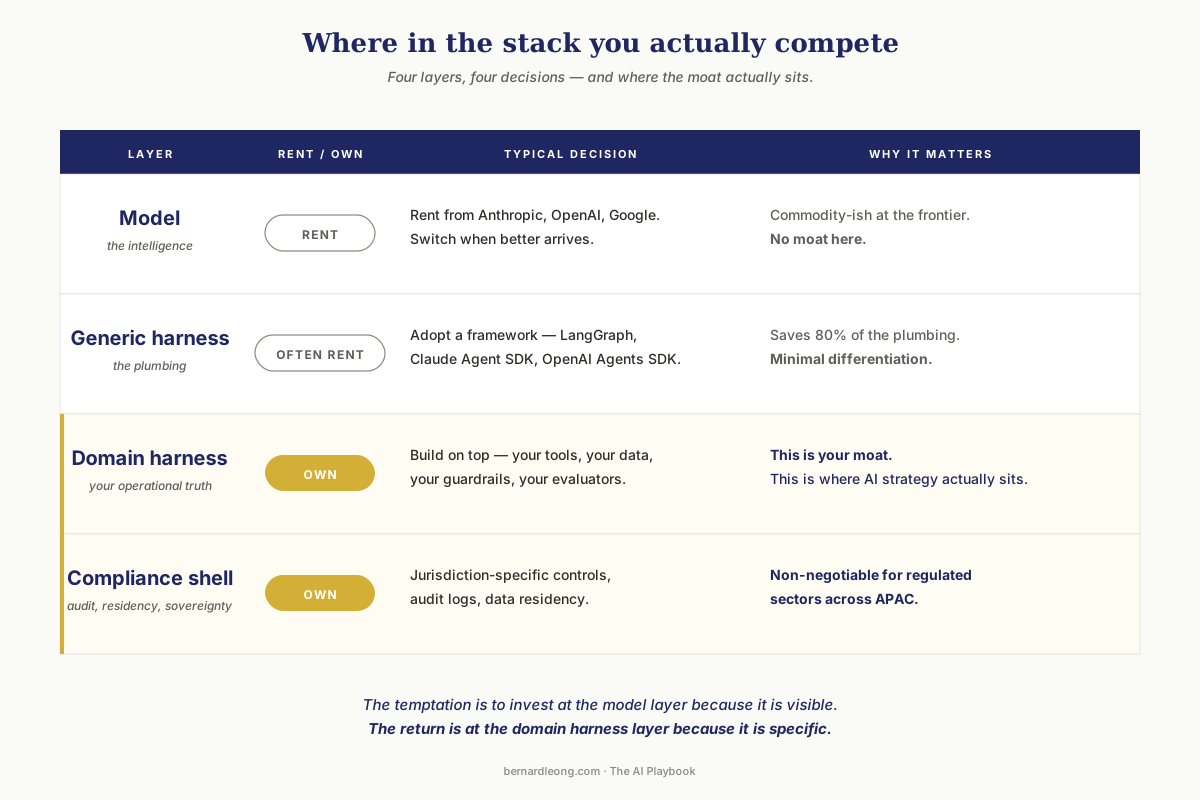
Three principles, in the order a board should adopt them.
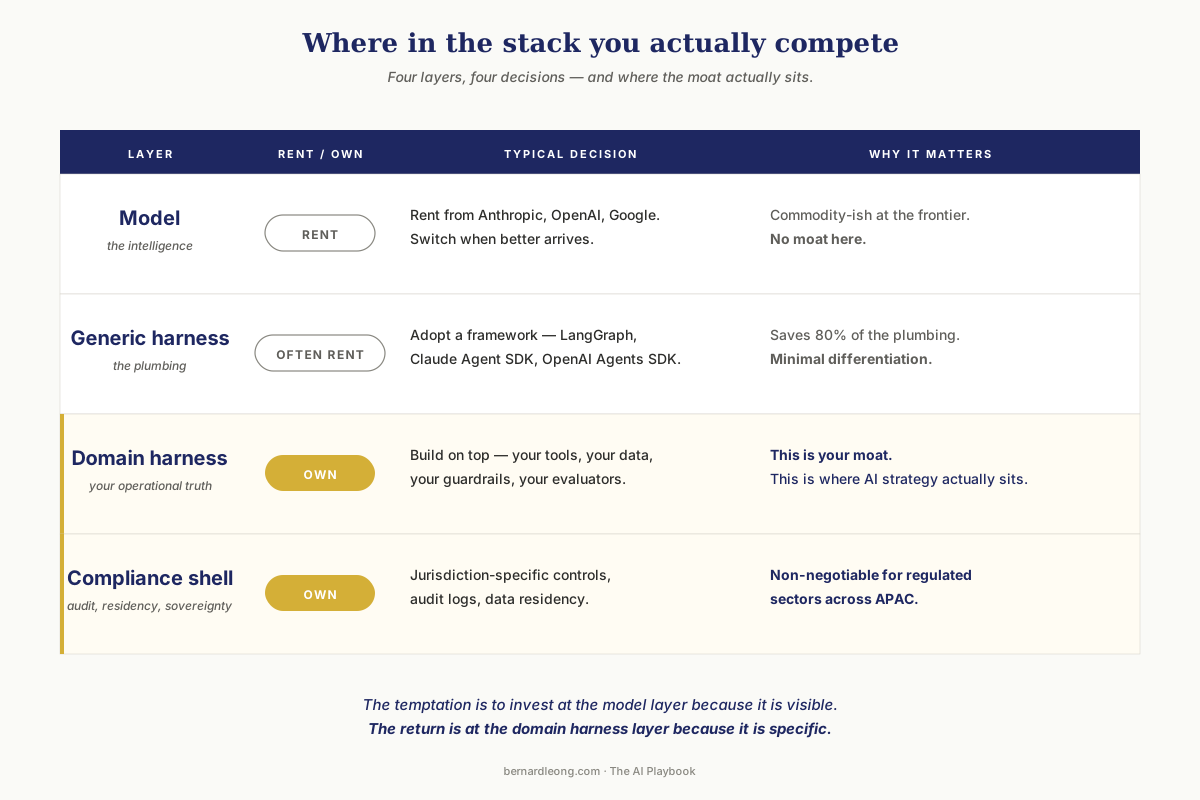
Principle 1 — Portfolio, not posture. Owning your harness is not binary. It is a portfolio decision. For commodity workflows — meeting notes, summarisation, generic drafting — rent the whole stack and do not apologise. For workflows where memory compounds into IP — customer history, policy interpretation, claims adjudication, regulator-facing decisions — own the layer that touches context and memory. Rent the model. Rent the base scaffolding. Own the part that decides how the agent behaves under pressure.
Principle 2 — The harness encodes your operational truth. Every threshold, retry budget, and recovery path inside an AI system is a calibrated answer to one question: what does failure actually look like in this fleet? When you rent a harness, you are running someone else's playbook in your business. Their thresholds were tuned on their telemetry, their failure modes, their users. For commodity workflows, that is fine. For mission-critical workflows it is malpractice in slow motion.
Principle 3 — Governance is decided at the harness layer or it isn't decided at all. Audit trails, data residency, sovereign-cloud routing, model-swap protocols, regulator-grade explainability — these are properties of the harness, not the model. You do not bolt them on after the fact. You build them in or you accept that you cannot deliver them. Every conversation I have with a regulated insurer eventually returns to the same point. The compliance officer never asks which model you used. They ask: can you reproduce this decision and show me the trail? That trail lives in the harness or it does not exist.
Compound reliability is a board metric
Here is the arithmetic that should change how a board thinks about AI for the rest of its career.
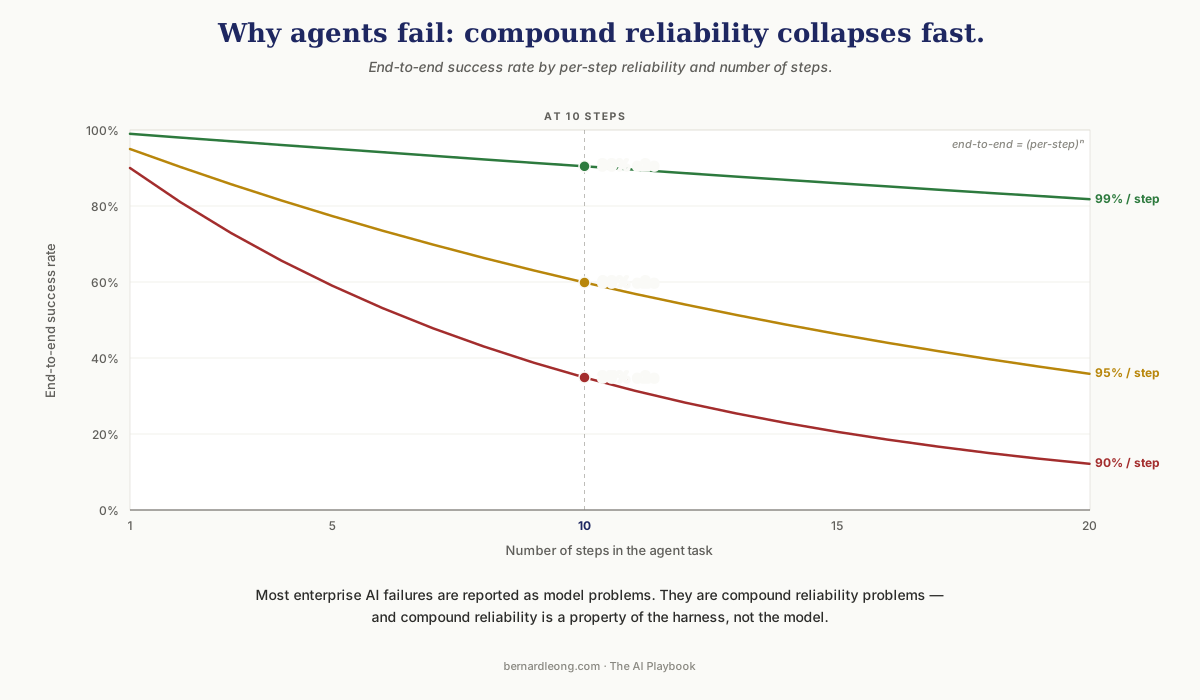
A 10-step agent in which every step succeeds 99% of the time will complete the full task end-to-end about 90% of the time. At 95% per-step reliability, end-to-end success drops to 60%. At 90%, it collapses to 35%.
Most enterprise AI failures show up in board reports as "the AI doesn't work in our context." That is almost never a model problem. It is a compound reliability problem, and compound reliability is a property of the harness — its recovery paths, its tool-result handling, its memory management, its evaluation gates. The model is not the bottleneck. The system around it is.
This is why a better harness on the same model can move an agent from the 30th percentile to the 5th percentile on a public benchmark. It is also why it can move a regulated workflow from "lawyer veto" to "production deployment." Same intelligence. Different scaffolding. Different result.
How harness ownership lands in APAC
The owned-harness argument lands distinctively in Asia, and the reason is structural. Four forces compound here in a way that shapes how every harness decision gets made — though each force plays out differently across the region.
The OpenClaw foundation model deserves the attention of every APAC enterprise — and especially every government technology team. An open harness with foundation governance offers a third path between "rent everything" and "build everything from scratch." For a mid-cap insurer in Jakarta or a sovereign cloud programme in Abu Dhabi, the route to harness ownership may run through participation in an open foundation, not through a six-figure procurement deal. The same logic explains AI Singapore's deliberate multi-architecture strategy with SEA-LION and Malaysia's choice of DeepSeek as the base of its first sovereign LLM stack — open weights plus your own harness gives you a sovereignty story that closed-weight rentals cannot. This is harness ownership through contribution rather than through procurement — and it deserves a serious look from every Permanent Secretary and every Group CIO who has been told the choice is binary.
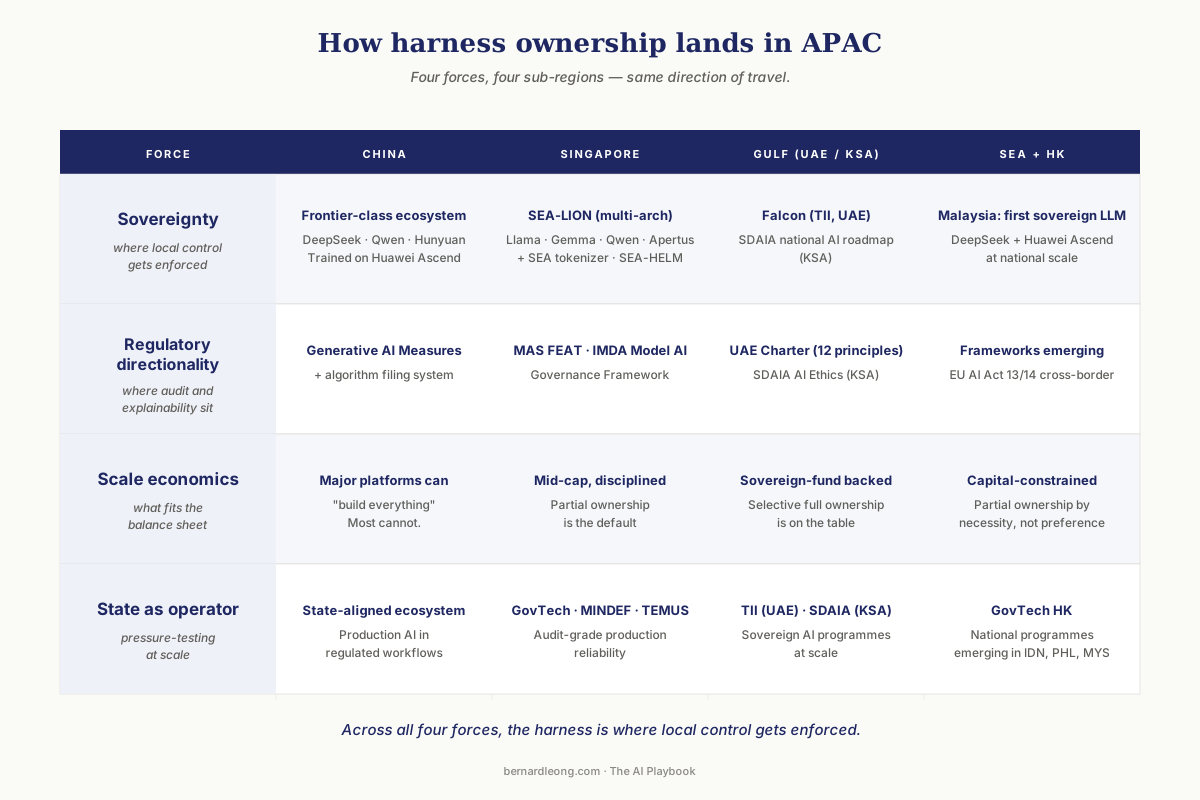
This is the texture of the harness conversation as it happens here. What it looks like in Brussels or in Bay Area boardrooms is for people closer to those rooms to describe — I do not have the visibility, and I do not propose to call it from a distance. What I can say is that the people making these decisions in Singapore, Jakarta, Riyadh, Abu Dhabi, Hong Kong, Manila, Kuala Lumpur, and across the Chinese platform ecosystem are not waiting for an external playbook. They are designing harness boundaries now, under their own constraints — because their regulators, their procurement officers, and their auditors are already asking the question.
The portfolio diagnostic
Five questions to ask of any AI workflow in your enterprise:
- Memory compounds. Does this workflow accumulate institutional memory that gets more valuable over time?
- Regulator-visible. Will a regulator one day ask you to reproduce a specific decision made by this workflow?
- Mission-critical. Is this on the critical path for revenue, mission, or duty of care?
- Switching cost. In 24 months, will leaving the current vendor cost more than it would today?
- Operational truth. Are your failure modes, latencies, or edge cases materially different from the vendor's typical fleet?
Score your workflow
0 / 5 yes
Own the harness.
Build the layer that touches context, memory, and governance. Rent the model.
Partial ownership.
Rent the model and base scaffolding; own context and memory; insist on portability clauses.
Rent the whole stack.
Do not apologise. Reinvest the saved capital in the workflows where you do own.
The scoring rule is deliberately blunt. Three or more "yes" — own the harness. Build the layer that touches context, memory, and governance. Rent the model. Two "yes" — partial ownership. Rent the model and base scaffolding; own the context and memory layer; insist on portability clauses. One or zero "yes" — rent the whole stack. Do not apologise. Reinvest the saved capital in the workflows where you do own.
This is a portfolio decision. It is not a binary one. Anyone who tells you to "own everything" is selling you complexity. Anyone who tells you to "rent everything" is selling you optionality you will lose in 24 months. Anyone who tells you the only path to ownership is to build everything from scratch has not been paying attention to what just happened with OpenClaw.
Close
You will not get to opt out of these decisions by buying your harness. You will only get to opt out of making them yourself, which is a different and much worse thing.
Every enterprise has a harness in 2026. Most do not know where theirs is, because they rented thirty pieces of it from twelve vendors and nobody put the diagram on the wall.
So the question is not whether to adopt AI. It is the one your board will eventually ask, the one your regulator will eventually ask, and the one your competitor's CEO is asking right now. Where is your harness, and who controls it?
Sources and further reading
The five-player moves
- OpenAI Frontier announcement (February 2026)
- OpenAI Workspace Agents (April 2026), VentureBeat.
- OpenAI Agents SDK update with model-native harness (April 2026)
- Anthropic Claude Cowork (January 2026)
- Anthropic Claude Design (April 17, 2026) TechCrunch.
- Microsoft Agent 365 (GA May 1, 2026)
- Google Gemini Enterprise Agent Platform (April 22, 2026)
- SpaceX/xAI option to acquire Cursor for $60B (April 21, 2026), CNBC
OpenClaw and the Steinberger hire
- Peter Steinberger's announcement (February 15, 2026).
APAC sovereign AI deployments
- AI Singapore's multi-architecture SEA-LION strategy (Llama, Gemma, Qwen, Apertus), GovInsider.
- SEA-LION official site
- Malaysia's Strategic AI Infrastructure with DeepSeek and Huawei Ascend (May 19, 2025), Bernama.
- Malaysia DeepSeek deployment, BusinessToday
Regulatory frameworks
- MAS FEAT Principles (Monetary Authority of Singapore, 2018).
- SDAIA AI Ethics Principles (Saudi Arabia, September 2023).
- UAE Charter for the Development and Use of AI (July 2024, twelve principles).
- EU AI Act Article 13 (Transparency and Provision of Information to Deployers)
- EU AI Act Article 14 (Human Oversight).
Conceptual reading on harnesses
- Sau Sheong, "Own Your Harness" — the engineer's-view companion piece:
- Anthropic engineering, "Effective Harnesses for Long-Running Agents" (2026).
- Vivek Trivedy, "The Anatomy of an Agent Harness," LangChain (March 2026).
- OpenClaw AI Foundation